
Most Buyers search this shoe after seeing studio photos, which hide the two things that actually decide a sale: how the color blocking reads at ankle height and how the toe box behaves after a week of wear. The Jordan 1 Low True Blue cement on feet looks calmer than the product shots suggest. White leather carries the shoe, and the blue and grey panels only separate when the pair is laced and moving.
That difference matters whether you are stocking a size run or explaining the shoe to a walk-in customer. Below you will find fit notes in US sizing, creasing behavior, care limits for the Cement finish, a comparison against other Jordan 1 Lows, and the checks to run before you place an order.
What the Color Blocking Actually Does
Expect a white leather base with True Blue on the swoosh, eyestays, and heel, plus Cement grey texture on the collar and heel panel. Under store lighting, the grey panel picks up a slight sheen. On foot, in daylight, it flattens out and the blue becomes the only real accent.
That balance is the reason this pair sells to customers who want color but refuse a loud print. Confirm panel materials on your own sample, since finishes vary between production runs. Some Cement panels are a coated surface rather than a dyed leather, and that changes how the shoe ages.
Build quality sits where most modern Jordan 1 Lows sit: adequate, not premium. Stitching is consistent on the heel tab and swoosh, and the leather has a light break-in. Do not sell it as a premium-tier pair. Sell it as a daily rotation shoe with a clean palette.
On-Feet Fit Across the US Size Run
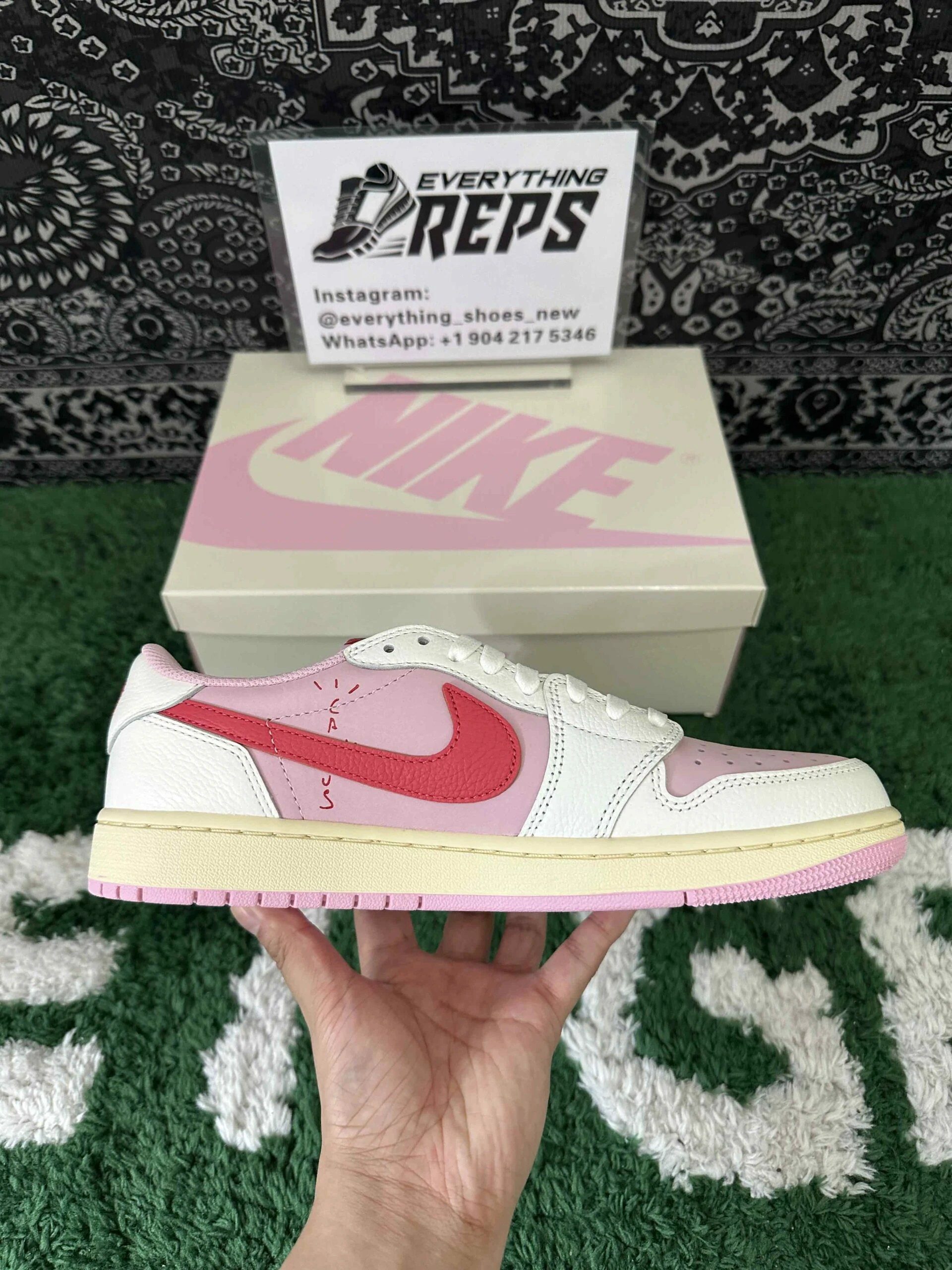
For most customers, the shoe runs true to size. The forefoot is roomy for a low-top, the heel holds without slipping, and the padded collar sits just above the ankle bone. Runners who size down in basketball shoes should not size down here.
Wide-footed customers are the exception. They usually need a half size up, or they need to accept a break-in period across the forefoot. Anyone planning to add an aftermarket insole should go up a half size, since the stock insole is thin and the toe box is shallow.
Testing the Jordan 1 Low True Blue Cement on feet in two sizes is worth the effort if you carry half sizes. Returns on this silhouette cluster around toe-box pressure, not heel slip, and a single try-on at the counter solves most of it.
How It Ages: Creasing, Scuffs, and Care
The toe box creases early, usually within the first two weeks of daily wear. Soft leather plus a shallow toe box means sharp diagonal folds rather than a slow, even roll. Customers who care about a clean toe box should stuff the shoe or use shoe trees from day one.
Midsole scuffs show quickly on the white foam, and the Cement grey collar panel is the part that fails first if it is a coated finish. Wipe with a damp cloth and a drop of mild soap. Skip bleach, skip machine washing, and skip harsh solvents on the grey panel.
Keeping the Jordan 1 Low True Blue Cement on feet past the honeymoon phase comes down to prevention, not cleaning. A suede brush on the Cement texture, a magic eraser on the midsole, and rotation between pairs will do more than any deep-clean routine.
Stacking It Against Other Jordan 1 Lows
Shelf space is the real constraint for most independent stores, so compare on the criteria customers actually ask about. Color contrast, break-in time, and how forgiving the leather is after creasing matter more than the model year on the box label.
| Pair | On-foot look | Sizing behavior | Best fit for your shelf |
|---|---|---|---|
| Jordan 1 Low True Blue Cement | Blue reads loudest, grey stays quiet | True to size for most; half size up for wide feet | Customers who want color without a loud graphic |
| Jordan 1 Low in white and black | Neutral, shows creases less obviously | True to size, roomy forefoot | Gift purchases and first-time buyers |
| Jordan 1 Low in grey and white | Low contrast, easiest to style | True to size | Customers who wear one pair every day |
| Jordan 1 Low OG build | Sharper shape, higher perceived value | Snug at first, breaks in over a week | Collectors and higher-margin single pairs |
| Jordan 1 Mid | Bulkier ankle, taller profile | True to size, more collar coverage | Customers who want ankle coverage in winter |
Seen next to a plain white and black pair, the Jordan 1 Low True Blue Cement on feet holds its own without competing. That makes it a good second or third colorway in a small Jordan 1 Low section rather than the anchor pair.
A Retailer's Pre-Order Checklist
Run these checks on a physical sample before you commit to a full size run. It takes twenty minutes and saves weeks of exchanges.
- Order a sample in US 9 and US 10.5 to check toe-box depth across the middle of the run.
- Flex the toe box by hand and look for sharp creases forming immediately.
- Inspect the Cement panel for uneven coating, bubbling, or factory peeling at the edge.
- Compare the size tag, box label, and insole print for matching style and size codes.
- Check heel tab stitching density and swoosh placement on both shoes, not just one.
- Ask the supplier for the production batch and confirm it matches what you approved.
- Verify the return and defect policy in writing before the deposit clears.
Authentication is a separate step. Use a professional legit-check service on any pair you cannot trace to an authorized distribution channel, and keep the paperwork with the inventory.
Frequently Asked Questions
Does this pair run true to size?
For most US buyers, yes. The forefoot is slightly roomy and the heel is secure. Customers with wide feet or anyone adding an insole should consider a half size up. If you can only stock one size run, buy true to size and keep a note at the register.
Will the Cement panel crack?
Coated finishes can crack at the flex points over time, especially on the collar and heel. Regular wiping and avoiding heat sources slows it down. Inspect a sample before ordering and reject any pair with visible bubbling or a dry, chalky surface.
Can customers machine wash it?
No. Hand cleaning with a damp cloth and mild soap is the safe method. Machine washing distorts the leather, breaks down adhesive, and dulls the Cement texture. Recommend a brush and shoe trees instead, and sell those alongside the pair.
Is this colorway easy to move in a small store?
It sells steadily rather than spectacularly. The palette suits year-round wear and photographs well for online listings, which helps conversion. Stock it as a supporting colorway and let a neutral white pair carry volume. Confirm demand in your own region before ordering deep.
What should I expect to pay wholesale?
Wholesale pricing on Jordan 1 Lows varies widely by quantity, batch, and shipping terms, so there is no single figure to quote. Ask for a landed cost breakdown that includes freight and duties, then compare against your target margin. Confirm all costs with your supplier and customs broker before ordering.
If you are building out a Jordan 1 Low section for the coming season, start with a sample and a landed cost sheet rather than a full run. Send us your size breakdown and target price, and we will put together a quote with current availability, batch details, and shipping options for your store.