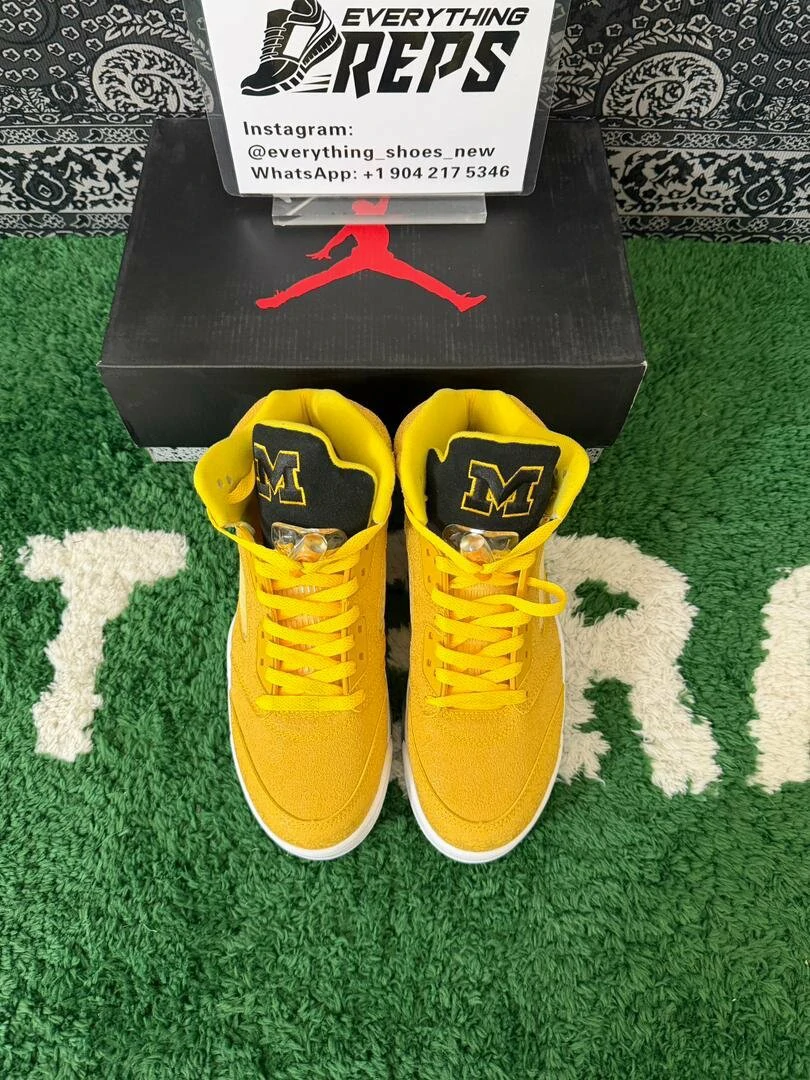
A metallic Jordan 5 restock is not a launch, and treating it like one is the fastest way to tie up cash in slow sizes. The pairs come back in familiar colorways, most demand comes from Buyers who missed the first run, and the sell-through curve is flatter than a launch-day drop. This guide covers how a Jordan 5 Metallic Restock should be evaluated before you commit: size depth, sourcing channels, authentication, and the landed-cost math most small shops skip.
The reader we have in mind is an independent shop or online seller buying tens of pairs at a time, not pallets. That scale changes every decision. You cannot absorb a bad size curve the way a chain can, so the checks below lean toward protecting cash flow rather than chasing volume.
Why Metallic 5s Hold Up in a Small Shop's Rotation
The Air Jordan 5 has an adult customer base that buys for personal wear, not for the flip. Metallic silver and black metallic treatments read as classics, which means they age better than trend-driven colorways and do not collapse when the hype cycle moves on.
Those buyers are often in their late twenties to forties, replacing a worn pair rather than chasing a drop. That produces repeat demand at a steady pace. It also means no spike, so expect pairs to sit for weeks rather than hours.
A Jordan 5 Metallic Restock usually arrives with less marketing noise than a new colorway, which means walk-in traffic will not do the selling for you. Plan the shelf space, the product photos, and the listing copy before the boxes land.
Where Restock Inventory Actually Comes From
Most Jordan 5 Metallic Restock inventory that reaches independent shops moves through three or four channels, and each carries a different risk profile. Authorized distribution is the cleanest route, but allocation is limited and rarely favors small accounts. Secondary-market bulk buys are easier to source and harder to verify. Liquidation and pallet deals can look cheap until you price the mix you actually receive.
| Channel | Size run control | Authentication risk | Margin potential | Paper trail |
|---|---|---|---|---|
| Authorized wholesale account | Full runs, often case-packed | Low | Moderate | Invoices with style codes |
| Secondary-market bulk buy | Partial runs, mixed sizes | Medium to high | Higher on paper | Varies by seller |
| Liquidation or pallet purchase | Unpredictable | High | Looks strong, often is not | Often thin |
| Transfer from another store | Small, hand-picked | Low | Moderate | Simple receipts |
Ask every supplier where the pairs originated and how the run was assembled. A seller who cannot answer that in one clear sentence is guessing, and you will inherit the guess along with the inventory.
Size Runs: Where Restock Pairs Actually Sell
Adult US men's sizes 8 through 12 carry most of the volume on the 5, with 9 to 10.5 moving fastest. Sizes below 8 and above 13 are slower on their own, though small men's sizes do sell to women who size down, so do not strip them out of the run entirely.
A workable starting split for a small order is roughly 60 to 70 percent core sizes and 30 to 40 percent tail sizes. Treat that as a benchmark only and adjust it against your own sell-through history. A shop near a campus sells a very different curve than one in a suburban strip center.
Before you place a Jordan 5 Metallic Restock order, map the offered run against your sales by size over the last two quarters. Any size where you still hold two or more pairs from a previous run should be cut to one unit or skipped altogether.
Fit matters here too. The 5 is generally true to size for most wearers, with a slightly roomy toe box, so narrow-footed customers sometimes go half a size down. Keep that in mind when you decide how many half sizes to carry, and confirm against the official size chart before you finalize a run.
Supplier and Authenticity Checks Before You Pay
Counterfeits of retro Jordan colorways are common, and metallic finishes are easy to imitate in a photo. Build a routine and apply it to every invoice, not just the first order from a new seller.
- Match the style code on the box label to the code on the shoe tag and to the invoice.
- Inspect the size tag stitching and font against a reference pair you trust.
- Check the heel logo, midsole paint lines, and lace locks for consistent spacing.
- Compare insole print, tissue paper, and box construction with a known pair.
- Weigh one pair against your reference pair, since counterfeit midsoles often run light.
- Photograph every box label before the pairs reach the sales floor.
- On any batch large enough to hurt, pay for third-party authentication on a sample.
Payment terms carry as much weight as the shoes themselves. Traceable payment methods leave a record you can use in a dispute, and no legitimate supplier needs a wire sent to a personal account on short notice.
When a batch feels off, stop the order. One seizure, chargeback, or refund cycle costs more than the margin on the entire shipment.
Landed Cost and Margin Math
Unit price is the smallest part of the calculation. Add inbound freight, customs duty and brokerage, payment processing, a returns allowance for online sales, and marketplace fees if you list on third-party platforms.
Duty treatment depends on classification and country of origin, and it changes. Describe the shipment to a licensed customs broker and get the rate in writing rather than relying on a forum post or a supplier's estimate.
On cash conversion, most independents want a pair to sell within 60 to 90 days at full or near-full price. Many shops aim for a gross margin in the 35 to 50 percent range on general footwear, with scarce sizes running higher. Those figures are benchmarks to negotiate against, not rules, so confirm your own targets before you commit.
If a size curve or colorway makes a 90-day sell-through unlikely, a lower unit cost will not fix the problem. It just makes the mistake cheaper to repeat.
Frequently Asked Questions
Is a restock the same as the original release?
Usually the same colorway and name, but restocks are new production runs. Box labels, production dates, and occasionally minor material details differ from the first release. Verify the style code on the box and the shoe tag rather than trusting listing photos or a supplier's description.
Do Jordan 5s run true to size?
Most buyers take their normal US men's size. The toe box is on the roomier side, so narrow-footed customers sometimes size down half a size. For stocking, treat true to size as the default and keep a modest number of half sizes on either side of your core range. Check the official size chart before finalizing.
How many pairs should a small shop order from a restock?
There is no universal number, so start from your own sell-through history instead of the allocation you are offered. A sensible first order covers your core sizes twice and the tail sizes once. Anything beyond that should be justified by past sales of the same silhouette in the same market.
Can I verify a batch before paying in full?
Yes, if you ask early in the conversation. Request box-label photos, style codes, and a short video of the actual pairs, then pay for third-party authentication on a sample. A supplier who resists a sample check is telling you something useful.
Do metallic colorways sell better in certain regions?
Regional demand shifts with local style, weather, and the customer mix around your store. Cold-weather markets often move darker metallics earlier in the season, while warm-weather shops see steadier year-round interest in lighter silver treatments. Pull two years of your own sales by colorway before you assume a national pattern applies to you.
If you are pricing a Jordan 5 Metallic Restock order and want a second read on the size curve, send over the offered run along with your last few months of sales by size. We will come back with a suggested split and a landed-cost worksheet you can take straight to your supplier. Reach out to our sourcing desk for a current availability sheet and a quote.