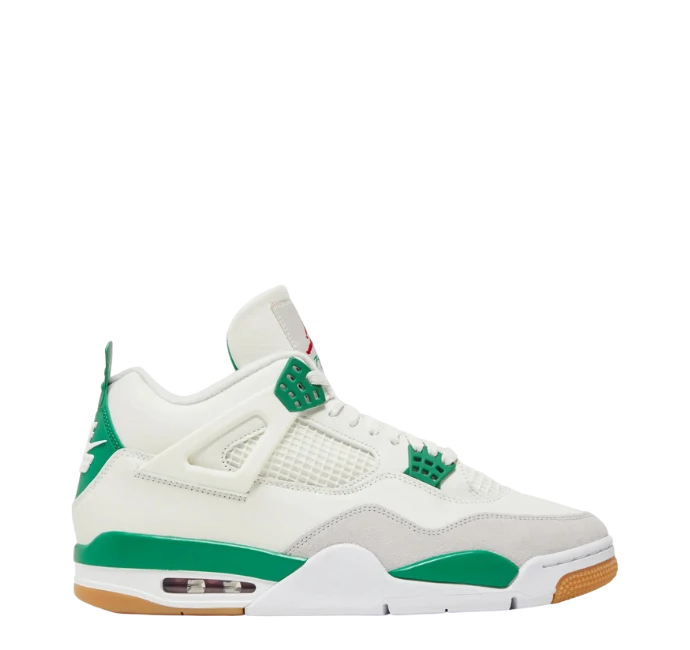
The Air Jordan 4 Grape is a white-based retro with purple and teal accents that sells to two different customers: collectors who track the colorway lineage, and walk-in buyers who simply like the look. Most sourcing mistakes happen because Shops treat those two groups as one.
Three things go Wrong most often. Buyers quote a colorway without confirming the style code, they spread a first Order too thin across sizes, and they skip the physical inspection. Each one costs real money. Here is how to handle all three.
Confirm the Colorway Name Before You Compare Quotes
Grape as a name started with the Air Jordan 5, and the trade has since stretched it across any Jordan 4 with purple or teal accents. Two suppliers can quote you "the grape 4" and mean different SKUs. Ask each one for a photo of the box label and the size tag, then match the style code and official colorway name against a current retail listing.
The physical details are consistent enough to use as a filter. Expect a white leather upper, mesh netting on the quarter panel, a visible Air unit at the heel, and grape and teal hits on the eyelets, tongue tag, and heel branding. If a sample photo shows a different netting shape or a painted-over Air window, the pair is not what the listing claims.
Sizing, Fit, and the Size Run Your Customers Actually Buy
Jordan 4 fit runs slightly narrow through the midfoot, and the toe box stays stiff for the first few wears. Most buyers take their normal US size, while customers with wide feet often go up a half size. Treat that as a starting point rather than a rule, and point shoppers to the official size chart when they ask.
When a customer asks whether the Air Jordan 4 Grape runs small, the honest answer is that it fits close to true for most people and tight for wide feet. That answer protects you from returns, which is where margin quietly disappears.
Depth matters more than breadth in a small shop. A first order spread across eight sizes will sell out of the middle and leave you holding the edges. Use the split below as a starting point, then adjust after your first sell-through.
| Size band (US men's) | Share of a test order | Why it moves |
|---|---|---|
| 6 to 7.5 | about 15% | Women crossing into men's sizing; steady but thin demand |
| 8 to 9 | About 30% | Core retail sizes with the fewest returns |
| 9.5 to 11 | About 40% | Fastest turnover; expect to reorder here first |
| 11.5 to 13 | About 15% | Slower sell-through, higher margin per pair |
Those percentages are planning guidance only. Confirm them against your own sales history and against the size run your Supplier can actually commit to.
Grade school sizes deserve their own line item. Parents buy them, the unit cost is lower, and returns are rarer because kids wear through pairs quickly. Do not bury GS pairs inside your men's run, or you will misread which sizes are working.
Authenticity Checks That Catch Most Problem Pairs
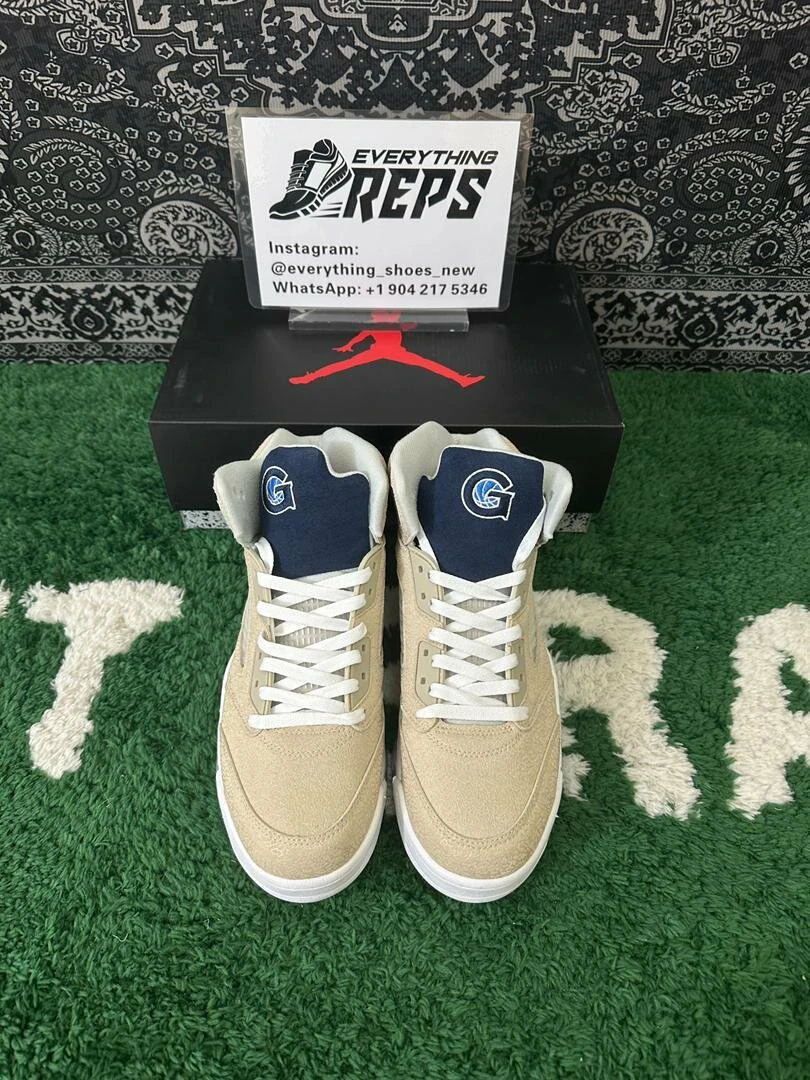
Counterfeit Air Jordan 4 Grape pairs are common because white-based color blocking is easy to copy and the flaws hide in plain sight. Run every inbound pair, or a sample from every lot, through the same list. Supplier photos are not a substitute for inspecting what you were shipped.
- Box label: style code, colorway name, and size must match the tag inside the shoe, and the print should be sharp rather than dot-matrix blurry.
- Stitching: even spacing along the heel counter and toe panel, with a double row where the quarter panel meets the mudguard.
- Netting: the plastic grid should be tight, evenly spaced, and clear, not wavy or cloudy.
- Midsole paint: crisp boundaries between the purple sections and the white foam, with no overspray on the upper.
- Tongue tag: correct Jumpman proportions and clean embroidery, with no bleeding thread.
- Weight and smell: low-grade pairs feel light and carry a strong glue odor out of the box.
- Outsole: sharp herringbone edges, not rounded or shallow.
Pair that list with a supplier policy. Anyone who refuses returns, refuses a third-party authentication check, or pushes payment methods with no recourse is telling you what the after-sale will look like.
Setting a Landed Cost Ceiling Instead of Chasing a Price
No number belongs in this article, because secondary prices move weekly and shift with size, condition, and whether the pair is deadstock with the original box. What you can control is the ceiling. Start from the price your customer will realistically pay, subtract platform or card fees, outbound shipping, and a returns allowance, then work backward.
Anything priced well under the market floor is usually one of three things: a counterfeit, a size substitution after the deposit, or a pair with a swapped box. Liquidation pallets and grey market lots can be legitimate sources, but only if you can inspect before the load ships. Ask for one sample pair and pay for it. A supplier who will not sell a single sample is not a wholesale partner.
Restock Timing and Order Depth
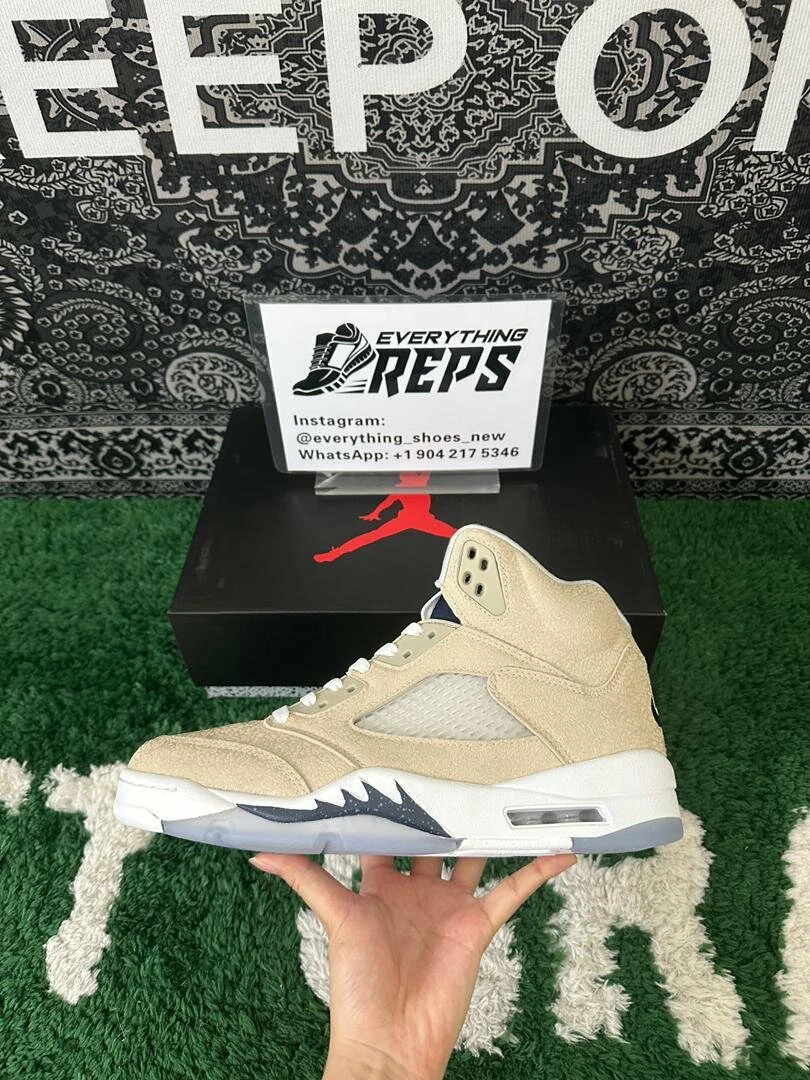
Retro 4s tend to arrive in waves rather than one drop, and secondary prices soften a few weeks after a restock as flippers clear inventory. If your first order sells through in under two weeks, resist the urge to reorder at peak. Wait for the next wave and buy the sizes you actually sold.
A first order of the Air Jordan 4 Grape at 12 to 24 pairs is enough to test demand in a single-door shop or a small online store. Common wholesale minimums sit in that range or slightly higher depending on the supplier, but terms vary widely, so confirm MOQ, size run, and the return window in writing. Figures here are general ranges, not quotes.
Frequently Asked Questions
Is this colorway true to size?
For most buyers, yes. The pair fits close to true with a slightly narrow midfoot, and wide-footed customers often size up a half. Keep a size chart at the counter and repeat the fit note on your product page to reduce exchanges and refunds.
Do grape purple retros hold resale value?
White-based purple retros stay steady rather than spike. They sell reliably in core sizes and sit longer at the extremes. Plan for turnover, not appreciation, and price your buy around a realistic 30 to 60 day sell-through rather than a hype window.
How many pairs should a small shop order first?
Twelve to 24 pairs across four or five core sizes is a workable test order for most single-location stores. Confirm the supplier's minimum order quantity before you build the size run, since a high MOQ can force you into sizes your sales history does not support.
What should I ask a supplier before paying a deposit?
Ask for the style code, a photo of the box label and size tag, the return policy, the MOQ per size, and whether they accept third-party authentication. Get all of it in writing. Vague answers on any single point usually predict a problem later in the shipment.
Can I mix grade school and men's sizes in one order?
Often yes, but keep them on separate lines in your inventory system. Grade school pairs carry different pricing and a different buyer, and blending them makes it hard to see which category is actually paying for the shelf space.
If you are sourcing for the next quarter, send over the size run and quantity you need and we will reply with availability, landed cost ranges, and sample options. Verify every figure with your own supplier before you commit, and keep one inspected pair on hand as your reference standard.