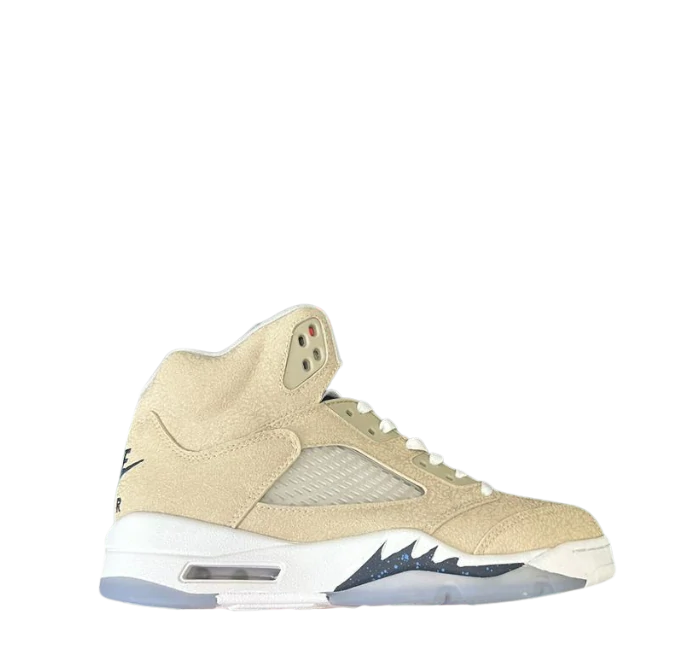
The Air Jordan 1 Low SE craft inside Out dn1635 100 is a deconstructed take on the Jordan 1 Low, built with exposed foam, reversed details, and a sail-and-off-white material mix instead of clean leather panels. That raw look splits a room: some customers want it on sight, others reach for a standard pair. What follows covers the build, the fit, and the practical steps store owners and online sellers Should take Before committing inventory.
What the Craft Inside Out Build Actually Is
SE sits a step above the base Jordan 1 Low in Jordan Brand's lineup, and Craft releases push materials rather than loud color blocking. On this pair the tongue and collar edges show foam, a tongue tag reads in reverse, and several overlays look sewn from the inside face of the material. The -100 suffix on DN1635-100 generally signals a light, white-based colorway, and this one lands in sail and off-white tones across suede and textile panels.
Hand-feel matters for how you sell it. Suede and textile crease faster than full-grain leather, and exposed foam flattens with wear, so a used pair never returns to its original shape. Say that to customers upfront; it prevents a complaint three weeks later when the collar softens.
Fit and Sizing for Staff and Customers
Sizing generates more returns than any other question on this model. Most Air Jordan 1 Low builds run true to size for shoppers who know their Nike size, with a slightly narrow toe box and a short break-in period. This pair feels roomier at the ankle because the padding is thinner and the foam sits exposed rather than wrapped in leather.
In practice, the Air Jordan 1 Low SE Craft Inside Out DN1635 100 fits closest to other SE and Craft AJ1 Lows, so a customer who already owns one should use that as the reference. Women buying a men's-listed size should convert on Nike's official size chart instead of guessing down a full size.
| Spec | Inside Out Craft (DN1635-100) | Standard AJ1 Low |
|---|---|---|
| Upper | Suede and textile mix, raw edges | Full-grain or synthetic leather |
| Collar and tongue | Exposed foam, reversed labels | Padded, standard branding |
| Fit | True to size, looser ankle | True to size, snug ankle |
| Break-in | Short, soft panels crease early | Longer, leather holds shape |
| Customer | Collectors and buyers who want a non-standard look | Broad everyday demand |
One note for online listings: measure the insole of a sample pair before you publish a size chart. It settles half-size disputes faster than any policy page, and it keeps your team from arguing with buyers over the phone.
Who Buys It and How It Merchandises
The core buyer already owns a few Jordan 1 Lows and wants something that does not look like everyone else's pair. Casual shoppers respond to the neutral sail palette, and that is where the volume sits. Hype-driven customers chase louder colorways, so treat this as a shelf item rather than a launch-day flip.
Keep it near the front of the display where the raw edges read at a glance, and style it with earth-tone or black denim. In photos, shoot the tongue and heel so viewers see the reversed branding. That detail is the sell.
Pricing runs on standard margin math, and the Air Jordan 1 Low SE Craft Inside Out DN1635 100 tends to sit in the same retail bracket as other SE Craft lows. Recheck current retail and secondary market data weekly instead of printing a fixed number on a shelf tag.
Pre-Order Checklist Before You Commit to a Size Run
Before you take the Air Jordan 1 Low SE Craft Inside Out DN1635 100 across a full size run, order it the way you would any seasonal style: small, tested, and weighted toward the sizes your customers actually buy. Work through this list before the deposit goes out.
- Confirm style code DN1635-100 on the box label, tongue tag, and insole.
- Request photos of the actual pair, not catalog images.
- Ask for the size run breakdown by size, not just total pairs.
- Compare that breakdown with your last six months of AJ1 Low sales.
- Check the quoted price against current retail and resale levels.
- Ask in writing what happens with damaged or mismatched pairs.
- Confirm shipping terms and who pays duties and brokerage.
- Place a test order before you commit to a pallet or a large lot.
Two steps do most of the work. A size curve pulled from real sales protects your cash, and a test order tells you more about a supplier than any price list they send.
Wholesale Sourcing and Supplier Vetting
Wholesale for Jordan product is rarely a public price list. Most sellers work through distributors, liquidation lots, or regional jobbers, and minimums vary widely, often by the dozen pairs per style with a required spread of sizes. Treat every figure as a range and confirm it in writing with the supplier.
Any supplier quoting the Air Jordan 1 Low SE Craft Inside Out DN1635 100 far below market needs a clear explanation, because that gap is the most common warning sign in this category. Ask for past invoices with buyer details redacted, a video of the actual stock, and a reference you can call.
Import math deserves its own column in the spreadsheet. Duties, brokerage fees, and freight move landed cost per pair more than most buyers expect, and rates shift through the year. Talk to a customs broker about classification and current duty treatment rather than relying on a supplier's estimate.
Mistakes That Cost Buyers Money
Over-ordering a full run is the classic error. Craft pairs sell steadily but rarely spike, so 24 pairs of one size sits for a year while 8 pairs across three sizes turns twice.
Second is trusting a photo set. Reversed branding is easy to fake badly, and replicas often get the tongue label orientation wrong or simulate edge foam with a glued strip instead of a cut, finished edge. Compare stitching density, box label fonts, and toe box shape against a pair you know is authentic, and use a professional authenticator on anything above a small test order.
Third is ignoring the resale ceiling. If landed cost lands near what the pair brings on the secondary market, there is no room left for returns, markdowns, or slow turns. Run that comparison before signing anything.
FAQ
Is the Air Jordan 1 Low SE Craft Inside Out true to size?
The pair generally fits true to size for buyers who know their Nike size. The thinner, exposed-foam collar makes the ankle feel looser than a standard AJ1 Low, and some wide-footed customers go up a half size. Check the official size chart before publishing your own recommendation.
What does the 100 in DN1635-100 mean?
Jordan Brand style codes end with a colorway number. The 100 suffix usually indicates a white or sail base, which matches the light tones on this release. Use the full code DN1635-100 when you verify stock or search supplier catalogs, since the same model ships in several colorways.
How do I spot a replica before it reaches my shelf?
Start with the box label: font weight, style code, and size must match the shoe. Then check tongue tag stitching, the placement of the reversed branding, and the foam edges, which should look cut and finished rather than glued from a separate strip. Pay for authentication on large lots.
Is this a good first stock order for a new store?
It works as a test style, not as an opening buy. Neutral tones sell across seasons, but the deconstructed look narrows the audience. Buy a small size run, watch sell-through for 60 to 90 days, then reorder only the sizes that moved.
If you are building a first order or restocking a proven size curve, send your target sizes and quantities for a quote. Confirm style codes, size runs, and landed cost in writing before you commit, and start with a batch small enough to test the supplier as well as the shoe.