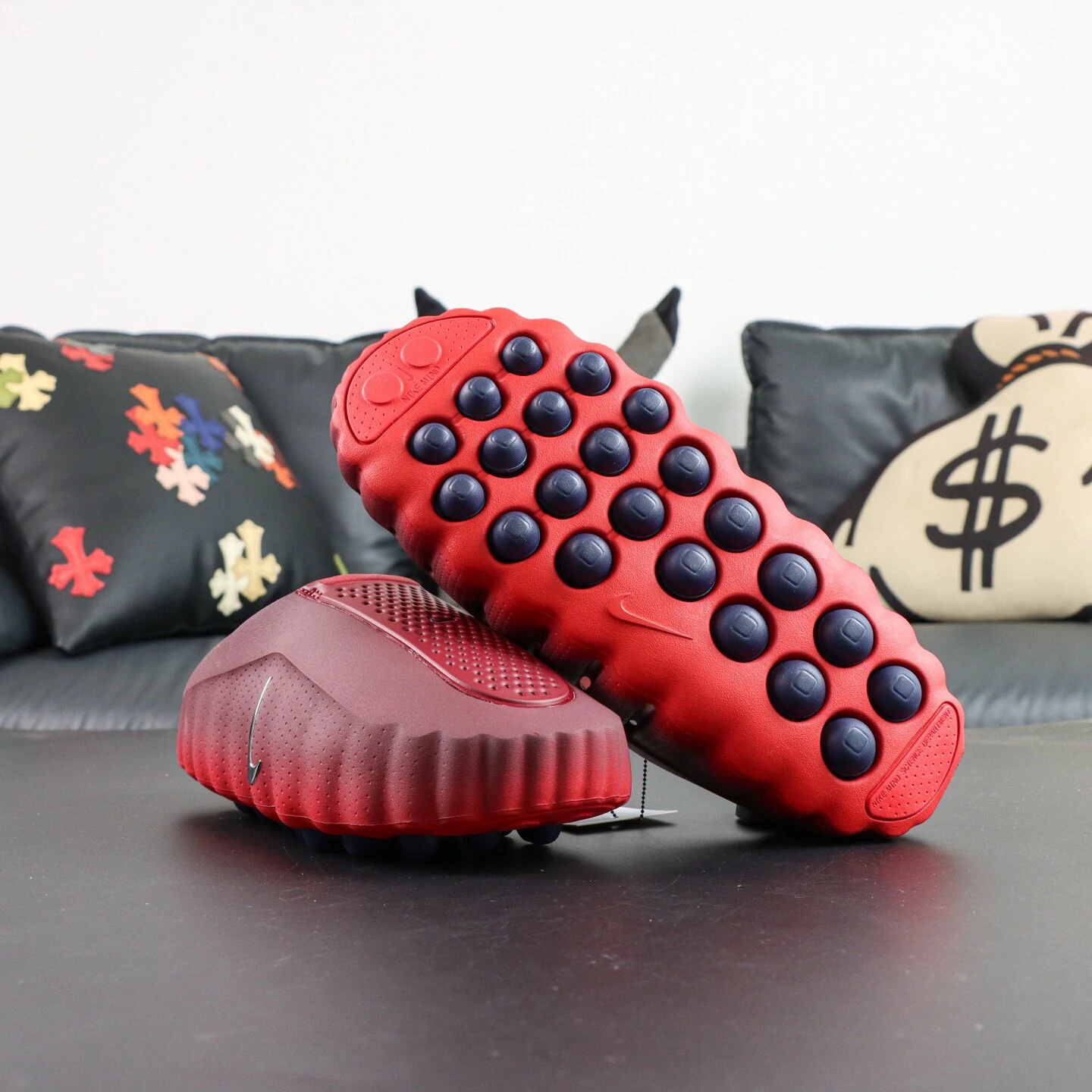
The nike dunk low Disrupt forbidden city sits on Nike's Disrupt tooling, a chunkier and more layered take on the Dunk Low, and that one fact drives most of the buying decisions that follow. Fit behaves differently from a standard Dunk, the upper carries more seams to inspect, and the colorway name travels through the wholesale channel faster than accurate photos do. Here is what we check before committing to a bulk order, from size curve to style code verification.
What the Disrupt Build Actually Is
Nike introduced the Disrupt as an offshoot of the Dunk Low, not a replacement for it. The upper keeps the Dunk's panel layout but exaggerates it: taller overlays, exposed stitching, an oversized tongue and heel detail, and a sculpted midsole with more rubber wrapped around the sidewall. On a shelf it reads as a statement shoe next to a core Dunk Low.
Two naming traps catch buyers. First, the Disrupt 2 is a separate and cleaner build with trimmed-down layering, so a supplier listing that says Disrupt may not show the pair you think you are buying. Second, the Disrupt line was largely pitched at women's sizing, and most colorways shipped that way. Confirm the size run on the exact style code instead of assuming a men's conversion exists.
Fit and Sizing: Where Returns Come From
The Disrupt's platform footprint changes how the shoe sits on the foot. Plenty of wearers find it slightly roomier through the forefoot than a standard Dunk Low, and some size down half a size. Others stay true to size because the firmer outsole needs room to flex. Only your own return data settles that question for your customer base.
What you can control is disclosure. Put the insole measurement in every listing, state clearly when a pair is women's sizing, and warn buyers that the outsole takes a few wears to soften. When we stock the nike dunk low disrupt forbidden city, we photograph the size tag next to a ruler so the buyer can see the scale. That single image removes a large share of runs-small complaints.
Break-in matters more here than on a core Dunk. The extra rubber on the midsole stays firm through the first week, and a customer who buys a half size too small will feel it at the toe. Build your curve around women's 6 to 10 first, then add the tails once you see real sell-through.
Build Quality and the Checks We Run on Arrival
More panels mean more chances for sloppy assembly. On a Disrupt, look at stitching density on the toe overlay, the glue line where the upper meets the midsole, and the paint edge along the sculpted sidewall. Uneven spacing between the left and right shoe is the fastest signal that something is off.
For authentication, work from method rather than memory. Compare the style code on the size tag, the box label, and any hangtag, and make sure all three agree. Check that stitching is consistent across both shoes, that midsole texture matches official imagery, and that box printing is sharp rather than smeared. On anything you plan to sell at a premium, a third-party legit check is cheap insurance. We are not an authenticator, and no responsible supplier should ask you to skip that step.
This is also where counterfeiters get lazy on the nike dunk low disrupt forbidden city. The Disrupt tooling is harder to copy than a plain Dunk cupsole, and the sculpted sidewall usually shows soft edges or tooling marks on replicas. Photograph your own pairs instead of reusing supplier images, and keep those files for disputes.
The Colorway Name Problem
Forbidden City is a story name, and story names drift. One supplier uses it, another invents a different label, and neither may match the official listing. Style codes do not drift. Ask for the code printed on the size tag, then match it against official product pages or a printed catalog before you send a deposit.
Color accuracy is the second issue. Factory lighting and phone filters shift tones badly, especially on pairs where the name implies a specific palette. Request a photo of the actual pair under daylight with the box visible in frame. If the seller cannot produce that, price the risk into the deal or pass on that lot.
Stocking and Cost Logic for Independent Shops
Treat a story colorway as a shallow buy. The customer for a Disrupt is narrower than the customer for a core Dunk Low: she wants the silhouette and the story, and she usually knows the name before she walks in. Sell-through is slower and less predictable, so our default opening order is a few pairs per size, expanded only after the first sell-through report.
Landed cost deserves the same scrutiny as the asking price. The Disrupt uses more material per pair than a standard Dunk Low, so a quote that looks aggressive often turns out to be a different model or a lower grade. Compare quotes against the same style code, ask what the price includes, and confirm who carries the freight. Ranges move a lot by source and season, so get the numbers in writing and check them with your freight forwarder.
| Attribute | Dunk Low Disrupt | Standard Dunk Low | Merch note |
|---|---|---|---|
| Tooling | Sculpted midsole, more sidewall rubber | Classic cupsole | Disrupt reads louder on shelf |
| Upper | Layered overlays, exposed stitching | Three-panel classic build | More seams to inspect for QC |
| Size run | Women's-first, limited large sizes | Full family sizing | Check the style code, not the listing |
| Break-in | Firmer outsole, several wears | Soft out of the box | Disclose it in the listing copy |
| Turn | Narrower buyer, slower sell-through | Steady and predictable | Buy shallow, restock on data |
Before You Commit to a Lot
Run this list every time, even with a supplier you have used for years. Most of the bad orders we hear about skipped at least one step.
- Get the style code in writing and match it to official product imagery.
- Ask for daylight photos of the actual pairs, box included, not stock renders.
- Confirm the size run and whether it is women's sizing.
- Ask what the quoted price covers: freight, duties, packaging.
- Request a size tag photo with a ruler for insole measurement.
- Agree in writing on returns or replacements for visibly defective pairs.
- Start shallow, then reorder from the same source once sell-through is clear.
FAQ
Does the nike dunk low disrupt forbidden city run true to size?
Feedback splits. The platform footprint gives more room through the forefoot than a standard Dunk Low, so a half size down works for some wearers, while others stay true to size because the firm outsole needs space. Publish insole measurements and let customers decide. Treat the official size chart as your only authoritative reference.
Is the Forbidden City colorway a women's-only release?
Most Disrupt releases shipped in women's sizing, but do not assume anything for a specific pair. Check the style code and the size conversion printed on the label. A listing that advertises men's sizes needs proof, such as a tag photo, before you pay a deposit.
How can I tell a fake pair from a real one?
Start with agreement between the style code on the size tag, the box label, and the shoe itself, then compare stitching density and midsole texture against official photos. Ask for daylight photos of the exact pair you will receive. For expensive lots, pay for a professional legit check rather than relying on memory.
Will this colorway restock?
Nike does not publish restock schedules, so treat a story colorway as a one-time run unless your supplier can show verifiable ongoing allocation. Plan the buy on the assumption that a reorder may not be possible, and price the lot accordingly instead of betting on a second shipment.
How deep should I buy on a story colorway?
Shallow. The buyer for the nike dunk low disrupt forbidden city is narrower than the core Dunk Low customer, so a few pairs per size is enough to test demand without tying up cash. Reorder from the same source once you have real sell-through numbers rather than projections.
Get a Quote Before You Commit
If you are pricing this Disrupt for a US storefront or an online shop, send us the size run you need and the style code you have been quoted. We will confirm what is actually available, flag anything that does not match official specs, and put the numbers in writing so you can weigh them against your other suppliers.