The adidas Samba Leather blue is one of those SKUs that moves without much help. Leather uppers hold their shape better than suede, blue colorways photograph well for online listings, and the silhouette crosses over from sneaker collectors to casual buyers. For a US shop, though, the money sits in the details: which blue, which width, and which size run you actually put on the shelf.
This article covers what the leather build changes compared with the suede version, how the sizing tends to run, what to inspect on incoming batches, and how to plan an order that does not turn into dead stock. It is written for independent Stores, online sellers, and buyers putting together a first or second wholesale order.
What the Leather Build Changes Beyond the Color
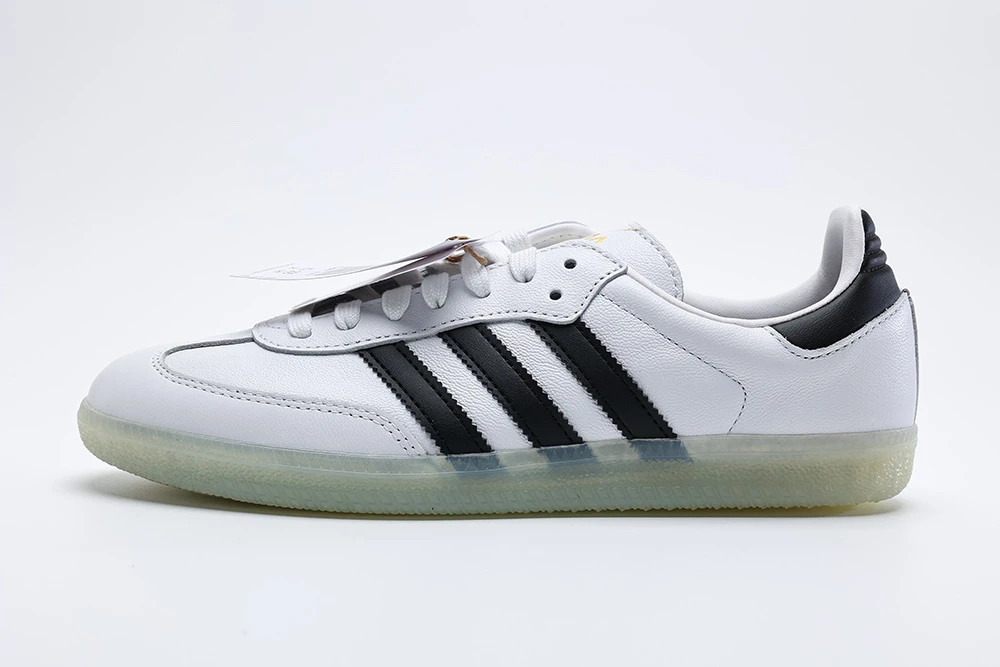
The Samba has been a low-profile indoor shoe for decades, and the leather versions stay close to that original shape. A leather upper gives you a firmer heel counter, a cleaner toe box, and a shoe that keeps its silhouette after a few weeks of wear. The suede T-toe overlay is still there on most versions, so the front end looks familiar.
Suede softens faster and hides small creases, but it also scuffs and collects dust on a display shelf. Leather wipes down, holds structure, and photographs more consistently. That matters when most first impressions now happen on a phone screen rather than in your store.
Blue is the second variable. Shades range from deep navy to a lighter sky tone depending on the season, and darker blues hide creasing better than pale ones. If you carry a single blue, pick the darker end for a general audience and go lighter only if your customer base skews toward women's sizes.
On the shelf, an adidas samba leather blue pair reads as more structured than the suede version beside it. Customers notice that difference immediately, even when they cannot explain it.
Sizing and Fit: The Questions Your Staff Will Hear
Most buyers find the Samba narrow through the forefoot. A large share go up half a size, and customers with wide feet often need a full size or a different model entirely. Leather loosens slightly over the first two weeks, so a snug fit out of the box usually settles into something comfortable.
Women's conversions trip up online sellers more than anything else. Confirm the conversion on the official size chart before you publish a listing, and never guess between men's and women's sizing on a product page. A customer who wears a 10 in most running shoes will often take a 10.5 in the adidas samba leather blue, and that half size is worth stating plainly.
| Version | Upper | Fit Notes | Break-in | Stocking take |
|---|---|---|---|---|
| Samba OG, leather | Leather with suede T-toe overlay | Snug forefoot, half size up common | Roughly 1 to 2 weeks | Strongest for online listings, photographs clean |
| Samba OG, suede | Suede throughout | Same last, softer feel | Faster | Scuffs visibly, keep for in-store traffic |
| Samba Classic | Leather and synthetic mix | Roomier, longer tongue | Fast | Indoor and futsal buyers |
| Gazelle | Suede or leather | Roomier than the Samba | Fast | Useful alternative for wide feet |
Treat the table as a starting point, not a rule. Ask your supplier which last a batch was built on, and check a sample pair in your own size before committing to a full run. Fit complaints cost more than the sample.
Order Checklist Before You Commit to a Size Run
Small shops lose money on size curves, not on the shoe itself. A run that is heavy in size 9 and light in size 8 sits in the back room for a year. Start from your own sell-through data, then fill the gaps.
- Pull your last 90 days of sell-through by size before you open a price list.
- Confirm pack sizes and whether the supplier breaks packs.
- Ask for the specific blue shade and a real photo of the batch, not a stock image.
- Request a sample pair and check stitching, heel tab alignment, and sole color.
- Get landed cost in writing, including freight and any fees.
- Confirm the return policy for defective pairs before you pay.
- Set a reorder trigger so you are not caught without your best sizes.
Run the checklist once per batch. Suppliers switch factories, and a detail that was correct last quarter can slip without anyone announcing it.
Price, MOQ, and Margin Math
Leather Sambas sit in the mid tier of sneaker retail, which means the shoe earns on turnover rather than on large unit margins. Case packs often run 6 to 12 pairs per style and color, and small shops can sometimes buy broken packs at a higher per-pair cost. Those figures vary widely by supplier and season, so confirm them directly.
Landed cost is where budgets break. Freight, duties, and payment fees can move your break-even by a meaningful amount, so build a landed-cost sheet before you agree to a price. A licensed customs broker can tell you the classification and duty rate that applies to your shipment.
For a first order, a tight size run of the adidas samba leather blue in one shade beats three shades with holes in the curve. Add depth once you know which sizes move in your market.
Checking Incoming Batches for Quality and Fakes
Most problems with this model are batch problems rather than outright counterfeits. Crooked stitching on the T-toe, a heel tab printed slightly off-center, or a gum sole that looks flat and orange instead of translucent amber are all warning signs worth writing down.
Compare any adidas samba leather blue shipment against a reference pair you already trust, in hand and under the same light. Listing photos are unreliable, and screen color management will lie to you about blue.
For large or high-value orders, pay for professional authentication on a sample pair before you accept the shipment. That cost is small next to a SKU you cannot sell. Keep the notes from each inspection so you can hold a supplier to the same standard next time.
FAQ for Buyers
Does the leather Samba run true to size?
Most buyers go half a size up, especially with wider feet. The last is narrow through the forefoot and the toe box sits low. Leather relaxes a little after a couple of weeks. Check the official size chart for the exact model and confirm fit guidance with your supplier before publishing it.
Is blue leather harder to maintain than suede?
Easier, in most cases. Leather wipes clean with a damp cloth and mild soap, while suede needs a brush, a protectant, and more patience. Pale blue leather shows scuffs faster than navy. Tell customers to skip machine washing and harsh cleaners, which can lift the finish.
What is a realistic minimum order for a small shop?
It depends on the supplier and on whether you buy full packs or broken sizes. Small shops often start with a few dozen pairs spread across two or three sizes, then reorder. Confirm pack sizes, payment terms, and who pays return freight on defective pairs before you commit.
How many sizes should a first order cover?
Cover your proven sellers first. Most US shops see the strongest sell-through in the middle of the run, roughly men's 8 through 11. Add one size at each end for special orders instead of stocking deep at the extremes. Review after 60 days and adjust the next buy.
Where do retailers usually source this model?
Authorized distributors, trade shows, and licensed wholesale marketplaces are the common routes. Ask each source for references, batch photos, and written terms, then compare landed cost rather than unit price. Avoid anyone who cannot document where the stock came from.
Planning a fall or spring buy? Send your target size curve and landed cost, and we will come back with available blue leather runs, pack sizes, and current lead times so you can compare them against your existing supplier.