If you are deciding whether the nike aluminum dunks low belongs on your shelf, treat it as a colorway buy rather than a hype buy. The shoe is a low-top Dunk finished in a pale silver-blue tone that reads neutral in product photos and noticeably cooler under Store lighting. That combination sells to customers who want a clean everyday pair instead of another loud retro drop.
What follows covers the practical side of stocking it: how the color reads in person, what to tell customers about fit, how the finish holds up, what to inspect on incoming cartons, and how to build a size run without sitting on dead Stock.
Reading the Aluminum Color Correctly
Aluminum sits between grey and pale blue. In flat light it looks almost silver-grey; in daylight the blue comes forward. Buyers who work from a single studio photo often expect a warmer grey and are surprised by how cool the tone is. Set expectations with your staff early, because a customer comparing it to a standard grey Dunk will notice the difference right away.
Panel materials on the nike aluminum dunks low have varied across releases, so do not assume leather throughout. Ask your supplier for a spec sheet listing upper materials, lining, and midsole Finish, then confirm it against the physical pair. Any light metallic-look finish also shows handling marks faster than a dark upper, which matters once pairs sit on a display wall for a few weeks.
Fit and Sizing: What to Tell Customers
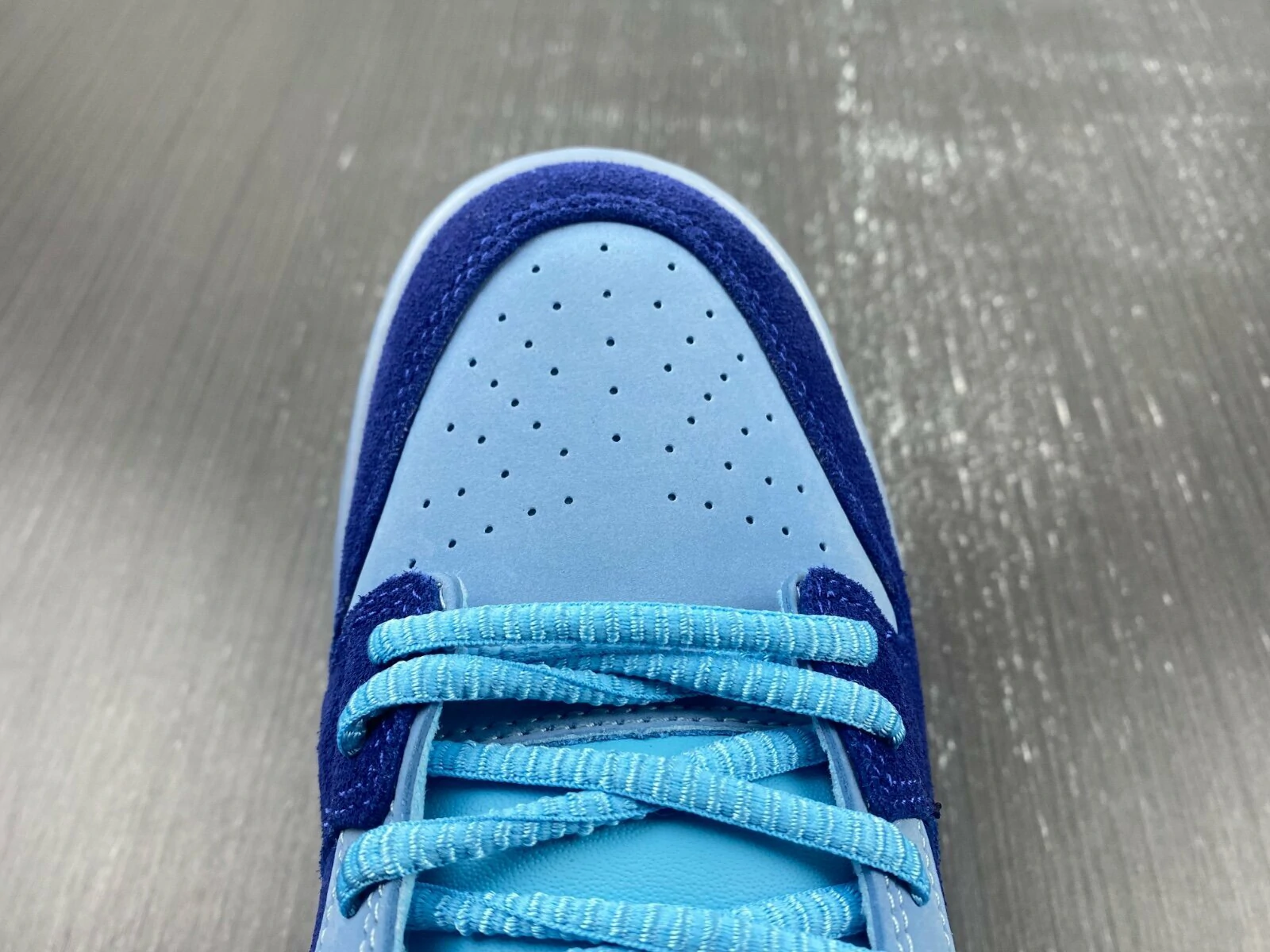
Dunk Lows generally run true to size for people with average-width feet. The toe box is roomy enough for most wearers, but the shoe sits fairly flat with minimal arch support, so anyone using orthotics should try a pair on first. Wide-footed buyers usually go up a half size, while narrow feet often stay true or drop half a size for a closer fit.
If a customer already wears Dunks, they know their size and you can sell straight from the box. New buyers are the ones who come back, so walk them through the basics before they leave the counter.
| Foot shape | Suggested move | Return risk if ignored |
|---|---|---|
| Average width | Order true to size | Low |
| Wide forefoot or high instep | Go up a half size | Medium to high |
| Narrow, low volume | True to size, or down half for a snug fit | Medium |
| Wears orthotics | Try in store, consider a half size up | High on online orders |
| Between two sizes | Size up, especially in summer | Low |
One housekeeping note for online listings: women's sizing runs 1.5 sizes above men's, so a men's 7 equals a women's 8.5. Publish both conversions in the product description. Customers who ask about the nike aluminum dunks low usually found it through a photo on social media and have never tried a Dunk, so the size conversation carries more weight than it would on a repeat staple.
Finish Care: Creasing, Scuffs, and Returns
Light uppers crease visibly. A pair worn twice develops a soft roll at the toe box, and on a pale finish those lines read louder than they would on black or navy. Tell customers up front, because the buyer who expected a shoe to stay crisp is the buyer who files the return.
For care, recommend a soft brush, lukewarm water, and a small amount of mild soap, worked in circles and wiped off with a microfiber cloth. Skip the washing machine and skip harsh solvents, which can lift the coating on finished panels. Store pairs with shoe trees or light stuffing, keep them out of direct sunlight, and rotate anything on display.
What to Inspect on Incoming Pairs
Inspection matters more on the nike aluminum dunks low than on a dark colorway, because flaws that disappear into black leather are obvious on a pale upper. Check a sample from every carton rather than the top pair only, and photograph anything you plan to dispute with a supplier.
- Stitch density and straightness along the toe cap, swoosh, and heel tab
- Panel alignment where the mudguard meets the eyestay
- Midsole paint quality, including overspray and drips at the heel
- Tongue label print sharpness, spacing, and stitching
- Size tag inside the collar, with font, layout, and production codes matching the box label
- Sole flex and glue odor, both of which flag storage or manufacturing problems
- Color match between left and right shoe in daylight, not store lighting
Two pairs from the same carton can differ in shade by a visible margin. Pull the worst pair before it reaches the shelf, and keep inspection photos on file in case a customer questions authenticity months later. For anything sourced outside normal distribution, have a trained authenticator review your photos rather than relying on a single check.
Building a Size Run Without Dead Stock
Treat the nike aluminum dunks low as a mid-tier volume piece, not a centerpiece. Middle sizes carry most of the turnover, while the ends of the run sit longer and are the first to be discounted. That pattern holds across most Dunk colorways and is a reasonable starting assumption for a first order.
If you are testing with 15 pairs, a split like this keeps the run usable without overcommitting:
- One pair each in US 7, 7.5, and 12 to cover the ends of the run
- Two pairs each in US 8.5, 9, and 10.5
- Three pairs each in US 9.5 and 10, the core turnover sizes
Margin depends on your landed cost, freight, and local competition, so run your own numbers instead of copying someone else's markup. Independent shops commonly aim for roughly keystone pricing on footwear, but treat that as a starting reference only and confirm everything against your own invoices and your supplier's terms. Keep the first order small, reorder the sizes that sell, and avoid tying up cash in a colorway that only a handful of customers recognize.
Common Questions From Buyers
Do Dunk Lows run true to size?
Mostly yes, for average-width feet. Use the official size chart plus a Brannock measurement as your two references. Wide feet usually need a half size up, and anyone wearing thick socks should plan for it. If you sell online, publish a clear fit note and return policy, since fit is the most common reason these pairs come back.
Is Aluminum a neutral that sells year-round?
It behaves like a grey, so it works across seasons and pairs with most outfits. Demand still shifts, and pale colorways tend to move fastest in spring and summer in most US markets. Plan reorders around your own sell-through data instead of a general rule of thumb.
How many pairs should a small shop test first?
A test order in the low double digits is typical for an independent store trying a new colorway, split across four to six sizes. Exact minimums depend on the supplier and are often negotiable on reorders. Confirm unit counts, size breaks, and pack requirements in writing before you pay a deposit.
What is the fastest way to check a pair's authenticity?
Compare the size tag and box label codes, review stitch density and panel alignment, and look closely at midsole paint. Then have a professional authenticator review photos if the pair came from an unfamiliar source. No single detail proves a pair is genuine, so treat any red flag as a reason to hold the order.
Will the light upper shift color over time?
Leather and synthetic panels can change with UV exposure and humidity, and pale finishes show it first. Store inventory in a dark, dry space, rotate display pairs, and sell older stock before newer arrivals. Give customers the same advice for the pairs they wear daily.
Ready to test this colorway? Send your supplier a size run with the split you need, ask for current photos of the actual cartons, and request the material spec in writing. Those three items in one email will save you weeks of back and forth before the first shipment lands.