Can you put adidas sambas in the washing machine? For the leather and Suede pairs that make up most US stock, no. A cold gentle cycle dulls the leather, mats the suede T-toe, and works at the glue that holds the gum sole. Hand cleaning takes 15 to 25 minutes and gives a cleaner result with almost no risk. What follows is the routine we hand to shops, the one narrow case where a machine cycle makes sense, and the mistakes that turn a sellable pair into a shelf warmer.
Materials Decide the Method
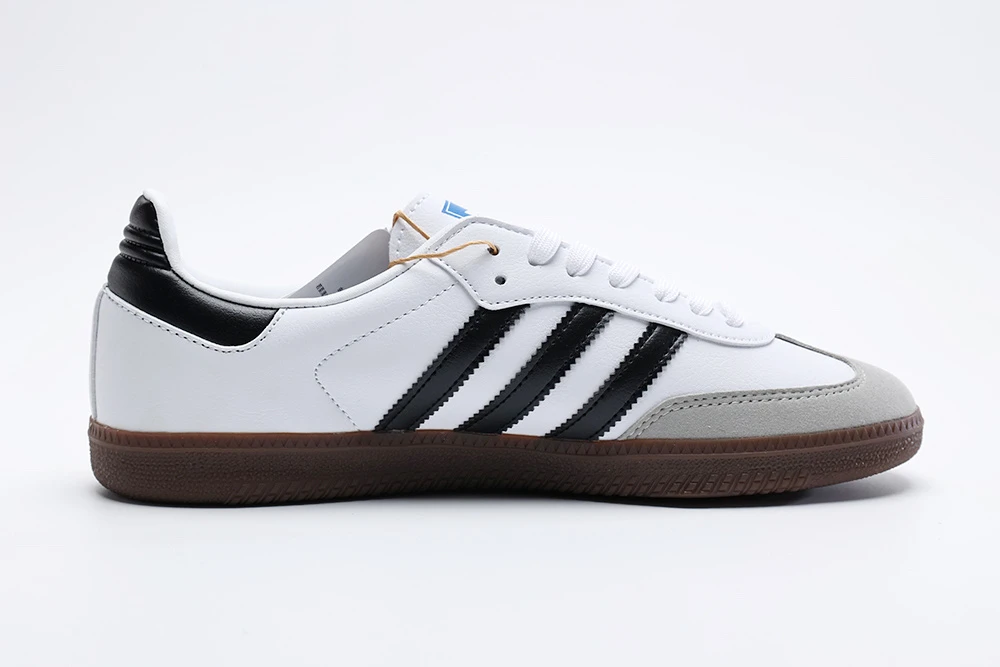
Almost every Samba sold today is a mix of materials, and each one reacts differently to water. The upper is leather, the T-toe and heel tab are suede, the midsole is EVA foam, and the outsole is gum rubber bonded and often stitched to the upper.
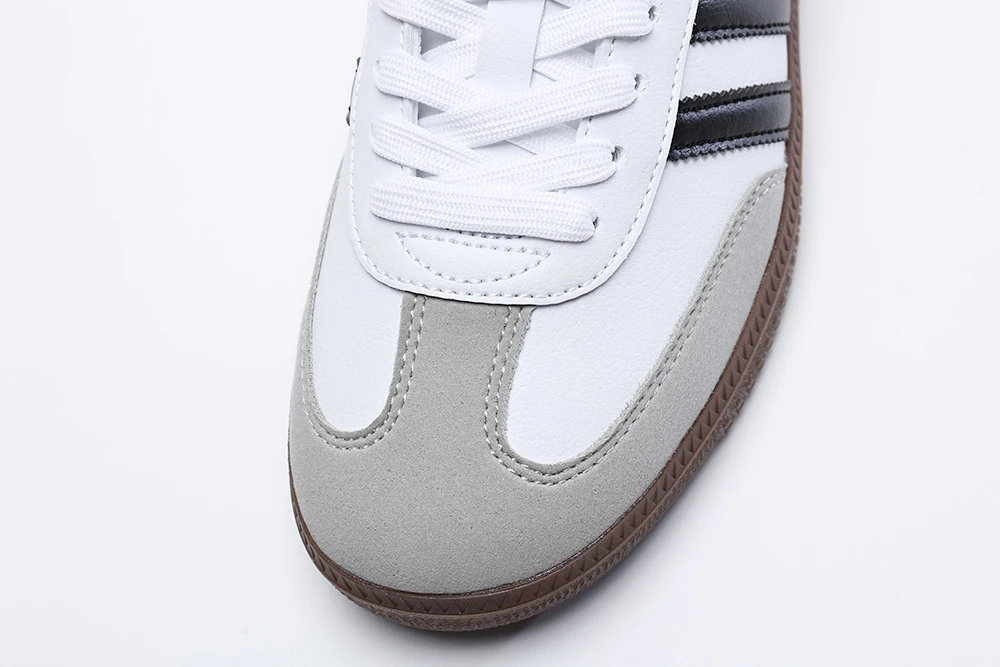
Suede is the weak point. It is napped leather, and once it soaks through, the fibers mat down and dry into a hard gray patch that no brush fully revives. Leather survives water better, but it loses its finish and shape when it is soaked and tumbled. Then there is the adhesive. Heat plus agitation is the worst combination for glued cupsole construction, which is why a dryer causes more failures than the wash cycle itself.
A Hand-Clean Routine That Holds Up
Set expectations before you start. Cleaning lifts surface dirt, not deep salt lines or denim dye transfer. Those need a targeted treatment, and sometimes a professional.
- Knock off loose dirt with a dry soft brush before anything gets wet.
- Pull the laces and insoles. Wash laces in a bowl of warm water with a drop of mild soap.
- Work saddle soap or a mild leather cleaner into the upper with a soft brush, one small section at a time. Wipe the foam away with a microfiber cloth before it dries.
- Clean the suede T-toe dry. Use a suede eraser on scuffs, then a brass or nylon suede brush to lift the nap.
- Wipe the midsole and gum outsole with a damp cloth and a little soap. A melamine sponge handles scuffs, but keep it off the leather.
- Stuff the toe box with plain paper, not newsprint, and air dry at room temperature for 12 to 24 hours.
- Condition the leather lightly once dry, then brush the suede again.
Most of that time goes to the suede. A shop cleaning inbound trade-ins may need closer to 30 minutes per pair once drying space and re-brushing are counted.
When a Machine Cycle Is the Least Bad Option
So can you put adidas sambas in the washing machine under any conditions at all? For a pair that is already failing, yes. If the suede is beyond saving or the uppers are torn, a cold delicate cycle costs you nothing you were going to keep.
If you do run one, stay inside these limits.
- Cold water only, delicate or hand-wash cycle, no spin or the lowest spin available.
- Laces and insoles out, shoes in a mesh laundry bag, one pair at a time.
- A small amount of mild liquid detergent. No bleach, no oxygen boosters on suede.
- No dryer, no radiator, no direct sun. Stuff with paper and air dry for a full day.
Even then, expect firmer leather, a rougher nap, and a shorter life. That trade is fine on a beater pair and bad on inventory you plan to sell.
| Method | Best for | Main risk | Dry time |
|---|---|---|---|
| Dry brush plus spot clean | Light dust, fresh scuffs | None if the suede stays dry | Under 1 hour |
| Saddle soap hand wash | Leather uppers, soiled midsoles | Over-wetting the suede T-toe | 12 to 24 hours |
| Cold delicate machine cycle | Pairs already past resale | Glue failure, matted nap, shape loss | 24 to 36 hours |
| Professional cleaner | Salt stains, dye transfer, vintage pairs | Cost per pair, turnaround time | 3 to 7 days |
Mistakes That Cost Repeat Customers
Can you put adidas sambas in the washing machine and then speed things up with heat? People try it, and the leather comes back brittle with a curled toe. Heat is the enemy at every stage of the job.
Other repeat offenders: soaking the whole shoe in a bucket, bleaching white leather, scrubbing suede with a wet brush, and drying on a radiator or in a hot car. Each one is fixable only up to a point.
Wet storage is the quiet killer. A pair packed damp into a poly bag grows mildew in transit, and that is a return you cannot argue.
What to Tell Buyers at the Counter
Buyers ask can you put adidas sambas in the washing machine, and the answer should come with a routine attached. A short printed card with the steps above cuts follow-up messages and damaged-pair complaints.
For shops, care items are an easy attach: a suede brush, a mild leather cleaner, a melamine sponge, a pack of cedar inserts. Margins on those items usually beat margins on the shoes themselves.
Online sellers can put the same information in the listing or on the packing slip. It reads as expertise, and it gives the buyer a reason to come back for the next pair.
Quick Answers for Shop Staff
Do Sambas shrink in the washing machine?
Not in a way you can control. If the question behind the question is can you put adidas sambas in the washing machine to tighten a half size, do not count on it. Leather may tighten slightly after drying, then relax again within a few wears.
Can the laces and insoles go in the machine?
Laces, yes. Bag them, use cold water, and air dry. Insoles can be scrubbed by hand with mild soap, but a machine cycle often warps the foam and breaks down the adhesive backing.
Will washing remove creases in the toe box?
No. Water can relax leather briefly, but creases return as soon as the shoe flexes. Creasing is a fit and walking-pattern issue, not a dirt issue, so treat it with shoe trees and light conditioning instead of a wash.
Is the gum sole safe in water?
Rubber handles water fine. The risk sits at the bond line between outsole and upper, plus the EVA midsole, which can compress when soaked and tumbled. A damp cloth on the sole is always the safer call.
Detergent or saddle soap?
Saddle soap for leather, a suede eraser and brush for the T-toe, mild dish soap diluted for midsoles and laces. Laundry detergent is too aggressive on leather finishes, and bleach will yellow a white pair permanently.
If you stock Sambas and want a care-kit bundle that fits your shelf space and price point, send over your target cost per kit, order quantities, and the SKUs you carry. We will come back with options, timing, and a landed-cost estimate you can confirm with your own customs broker.