The adidas Samba women beige black colorway is a two-tone take on Adidas's oldest indoor soccer silhouette, and for most US women's accounts it sits in the middle of the risk curve. It outsells loud fashion colors and trails core white by a wide margin. Whether it belongs in your spring or fall buy comes down to fit, material, and how fast this particular color turns in your region. What follows is a buying read for store owners and online sellers rather than for collectors.
What This Colorway Actually Is
Strip away the shade names and you have a Samba OG: a low-profile upper with a suede T-toe overlay, three serrated stripes, and a gum rubber outsole on most builds. The beige here is usually a sand or oat tone rather than a true tan. Adidas renames shades almost every season, so the color printed on the box label rarely matches the color name on a wholesale sheet.
That naming drift matters more than it sounds. Two pairs that photograph identically can sit a full shade apart in person, and the second one may be the pair your customer already owns. Confirm the exact color code on the box label Before you commit to a quantity.
Fit, Sizing, and the Unisex SKU Trap
Most women who try a Samba on in store go down a half size. The narrow toe box is the reason the shoe feels snug rather than short, and the upper does not stretch much with wear. If your staff sizes customers up out of habit, expect exchanges.
The bigger operational issue with the adidas samba women beige black is SKU type. Some releases ship in women's sizing and others in unisex sizing that follows men's numbers, which puts a two-size gap between two pairs of the same physical length. Check the run printed on the box before you build an order matrix.
Tail sizes move slowest in most women's runs. A small or large end size in a light colorway can sit for months while the middle of the run clears in weeks. Order shallow on the ends and deeper through the 7 to 9 range unless your own sales history says otherwise.
How to Set a Size Curve
Pull last year's sell-through by size for any neutral women's sneaker you carried, then weight it toward the middle. A simple starting curve for a 24-pair run looks like 2/3/4/5/4/3/2/1 across the run, trimmed or extended to fit the sizes you actually stock. Adjust from real numbers after the first reorder, not before.
Materials, Wear, and Return Risk
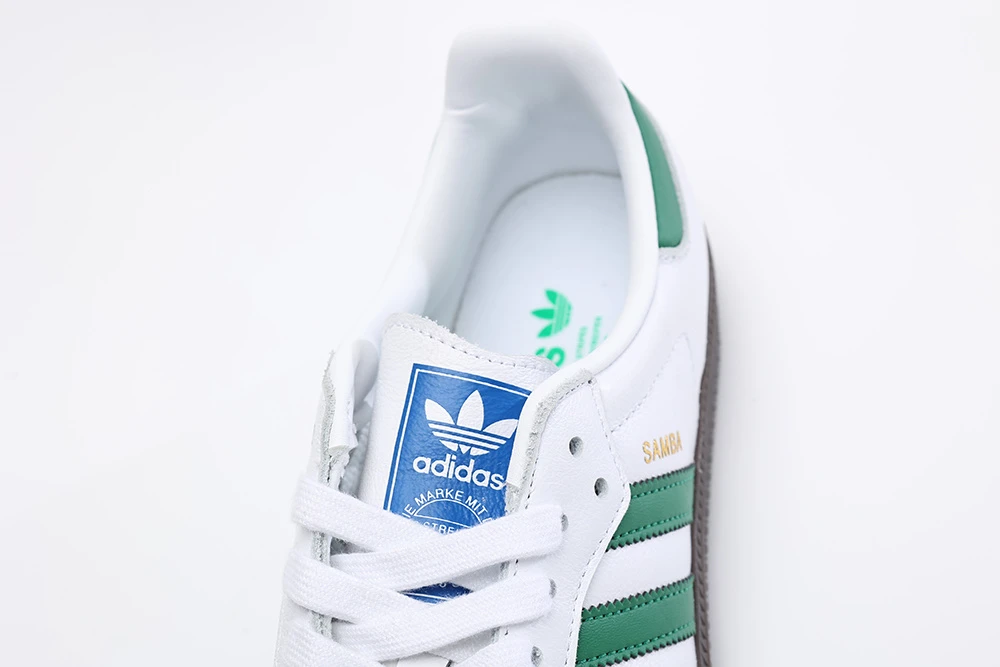
Build quality varies by release, so treat material claims per SKU rather than per model name. Coated leather uppers with a suede T-toe are the standard, but you will also see textile linings, synthetic leathers, and vegan versions sold under similar names. Ask the supplier for a written material breakdown if the listing photo is all you have.
Beige leather is less forgiving than white. Scuffs read darker, indigo from raw denim transfers at the heel collar, and one rainy walk can leave water marks that do not brush out. None of that stops the shoe from selling, but it does raise the odds of a complaint two weeks after purchase.
A practical fix: keep a suede brush and a neutral protector behind the counter and mention both at checkout. Accessory attach rates on light-colored uppers are decent, and a customer who buys the protector is less likely to bring the pair back.
How Beige and Black Sells by Market
Neutral two-tone Sambas behave nothing like the white-and-black core pair. They sell as a second purchase, to women who already own the white version and want something that reads less common in a room full of the same shoe. That buyer tends to be older and less price sensitive.
Regional demand for the adidas samba women beige black shifts more than most retailers expect. Northern stores take sand tones earlier and keep them moving into fall, while warm-weather accounts see beige peak in spring and flatten by July. Online, the colorway outperforms in-store because shoppers can search the exact shade name.
Where the shoe struggles is a crowded sneaker wall. Placed between white Sambas and black Sambas, a beige pair can look muddy under warm store lighting. Pull it forward, light it properly, and the sales conversation changes on its own.
| Variant | Peak window | Typical buyer | Markdown risk | Restock approach |
|---|---|---|---|---|
| Beige/black, gum sole | Spring into early fall | Second-pair buyer, 25 to 40 | Medium | One reorder, then hold |
| Beige/black, black outsole | Fall and holiday | Gift buyer, younger shopper | Medium to high | Test small, reorder on proof |
| White/black, gum sole | Year-round | First-time buyer | Low | Continuous, core sizes deep |
| All black | Fall and winter | Workwear and hospitality | Low | Steady, replace as sold |
Pre-Order Checklist
Run the same checks on every purchase order, every season. Five minutes here saves weeks of markdowns later, and it gives you something concrete to hold a vendor to if the shipment lands wrong.
- Confirm the exact shade name and color code on the box label, not the wholesale listing title.
- Confirm whether the run is women's or unisex sizing, and write the conversion into your POS notes.
- Request the material breakdown per SKU: upper, lining, outsole compound.
- Ask for a photo of the actual pair in daylight, not the studio image.
- Confirm outsole type, gum or black rubber, so your product page matches what arrives.
- Set the size curve before the order, not after the first sell-through report.
- Get lead time and the restock window in writing before you announce a launch date.
Then do the landed-cost math. Add freight, duties, and any broker fees to the unit cost, and compare the result against your target retail multiple rather than against the vendor's suggested price. Duty rates and brokerage charges change, so confirm the current numbers with a customs broker for your specific classification. Use ranges from your own past shipments as a sanity check, and treat any figure a supplier quotes as an estimate to verify.
Common Buyer Questions
Does the beige and black Samba run true to size?
Not for most women. The toe box is narrow and the upper does not stretch much, so fitting to a measured foot often produces a cramped feel. Many customers take a half size down from their usual sneaker size. Check the official size chart for that SKU and keep a Brannock device on the floor.
Which sells faster, beige and black or white and black?
White and black remains the volume pair in almost every market. Beige sells slower but attaches to a different customer, usually someone adding a second or third pair. Treat it as a color option inside a Samba program rather than a replacement for the core pair, and order it on a shorter leash.
How do I verify a supplier's pairs?
Start with the box label, the SKU, and the size run, then compare stitching density, the suede T-toe edge, and the outsole tooling against a pair you already own. Wholesale listings for the adidas samba women beige black rarely state whether the run is women's or unisex, so ask directly. For large orders, pay for third-party authentication.
Can I mix this colorway into a bulk order with other Sambas?
Usually yes, and it often helps. Suppliers commonly build mixed orders across colorways to reach a minimum, and a neutral shade is easier to slot in than a seasonal one. Per-color minimums and pack ratios vary by vendor, so get them confirmed in writing before you commit to a ship date.
Is beige a hard color to keep clean?
Harder than white in one specific way: marks show as darker smudges rather than gray ones, and denim transfer is stubborn. A neutral protector applied before the first wear handles most of it. Tell customers this at the register and you cut down on post-sale complaints considerably.
If the adidas samba women beige black is on your open-to-buy list for the next season, send your size curve, target quantity, and ship window to our buying team. We will come back with neutral colorway availability, pack options, and current lead times so you can compare them against the vendors you already use.