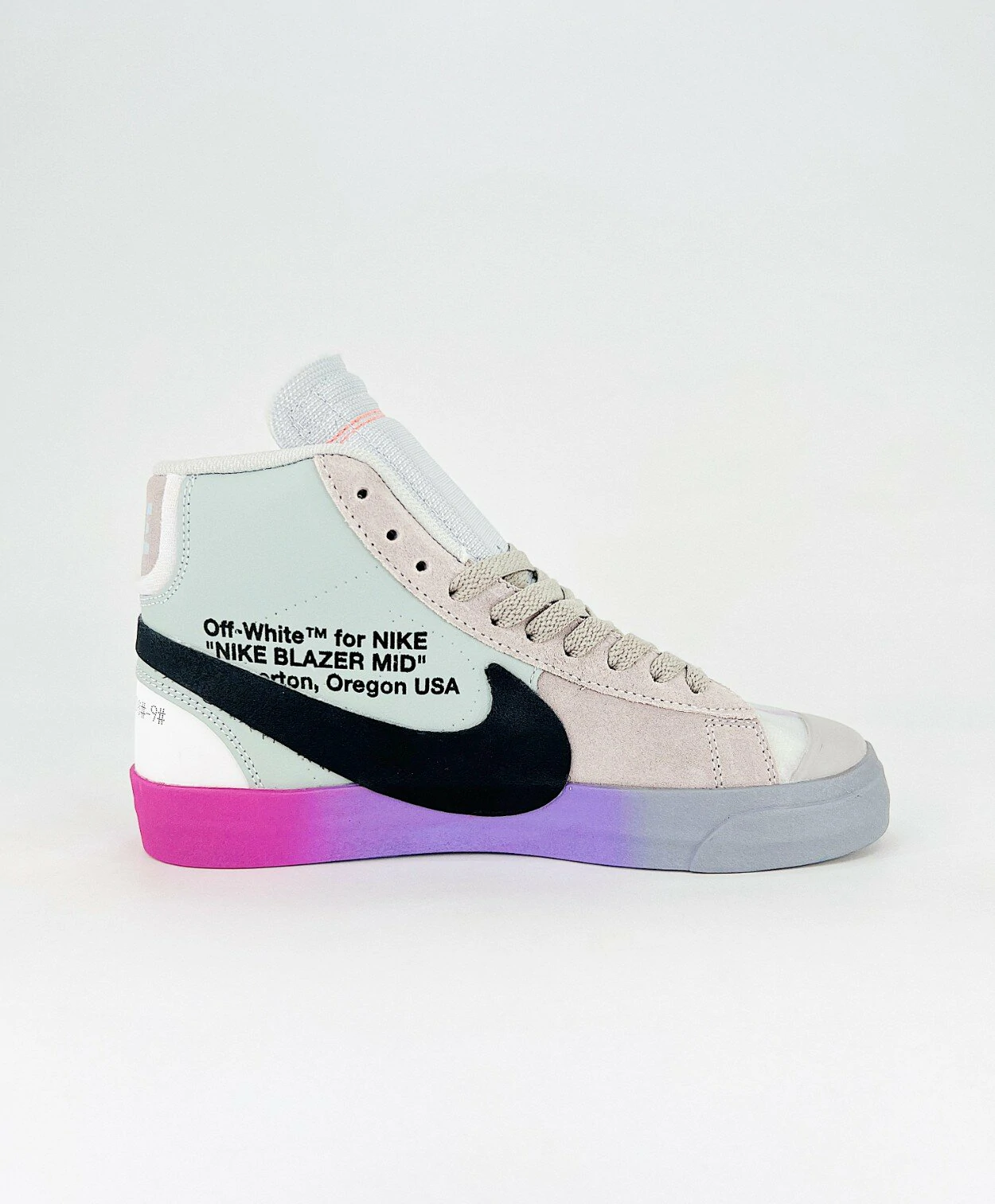
Nike builds men's shoes around a heel-to-toe length in centimeters, then converts that number into US, UK, and EU sizes. The Nike shoes size chart for men is a conversion tool, not a fit promise. Two pairs marked US 10 can still feel different once the last shape, the width, and the upper material change.
What follows is a working reference for store owners, online sellers, and buyers assembling a bulk Order. It covers how to read the chart, where the numbers stop being useful, and the checks worth running Before you pay for inventory.
How the men's chart is actually built
Every entry starts with length. Nike lists US, UK, EU, and CM next to each other, and the CM column is the one that stays stable across markets. A US 9 measures 27 cm inside the shoe, which is why the same pair sold in Seoul and in Chicago carries the same internal length.
Half sizes move in 5 mm steps through most of the range, then switch to roughly 1 cm above US 12. That is why a jump from 13 to 14 feels larger than a jump from 12 to 12.5. Buyers who build size runs from memory tend to miss this detail.
US, UK, EU, and CM side by side
On the Nike shoes size chart for men, a US 9 maps to UK 8, EU 42.5, and 27 cm. The table below covers the sizes that make up the bulk of men's volume. Treat these as approximate and confirm them against the current published chart before you print a size guide for customers.
| US men's | UK | EU | Heel-to-toe (cm) |
|---|---|---|---|
| 8 | 7 | 41 | 26 |
| 9 | 8 | 42.5 | 27 |
| 10 | 9 | 44 | 28 |
| 11 | 10 | 45 | 29 |
| 12 | 11 | 46 | 30 |
One column is missing from that table, and it is the one that generates returns: width. The men's chart assumes a standard D width, and most lifestyle and basketball models ship only in D. Wider options, usually 2E and occasionally 4E, appear in a limited number of running models and are listed on their own.
For wholesale that gap has a real cost. A customer with a wide forefoot gets a correct length from the chart and still cannot close the shoe comfortably. Selling them a standard-width Dunk because the length matches is how a size exchange starts.
Where the chart stops helping
Last shape and model quirks
Fit drifts by model, sometimes by colorway. Many customers take a half size down in the Air Force 1 and stay true to size in a Pegasus. Basketball retros split the other way: a Jordan 1 usually tracks the chart, while a Dunk or a Jordan 4 can feel tight across the forefoot because of padding and panel construction.
Keep those notes on the product page, one line per model. A single storewide claim like "runs true to size" is the fastest way to teach customers to ignore your sizing advice.
Socks, insoles, and break-in
Thick socks and aftermarket insoles can add close to half a size of internal volume. Knit uppers stretch a little over the first few weeks; patent leather and stiff suede do not. When a customer sits between two sizes, ask what they wear in that shoe, not just what they measure.
No chart replaces a try-on. The Nike shoes size chart for men describes length, not volume, so a high instep or a wide forefoot still needs a real fit test or a clearly written return policy.
Five checks before you commit to a bulk order
Size errors are cheap to fix on one pair and expensive on a pallet. Run these five checks before you sign off on a purchase order, especially with a supplier you have not bought from before.
- Confirm the chart version. Ask which conversion table the supplier uses on the box label. US to EU mappings have shifted slightly over the years, and mixed stock does happen.
- Read the label, not the listing. The size printed on the box and the size on the tongue tag should agree with the CM length. Mismatches are worth a second look.
- Match the model to the fit note. Size down for a known roomy silhouette, size up for a narrow one, and say so in the listing so the customer makes the same call you did.
- Build the run from your own sell-through. Your POS data beats a generic size curve every time. If 10 and 10.5 move fastest, weight the order there instead of spreading it evenly.
- Agree on a size-error policy in writing. Ask what happens with mislabeled pairs, what window you have to report them, and who pays return freight.
That last point matters more than most buyers expect. A clear written policy on mislabeled stock is often a better signal of a reliable supplier than a slightly lower unit price.
Building a size run that sells through
A common starting point for men's footwear is US 8 through 13, with the deepest coverage between 9 and 10.5. That range serves a broad customer base, and the tails at 7 and 14 can be added in small quantities once you see demand. Treat it as a starting point rather than a rule, since your local buying pattern may lean narrower or wider.
Half sizes deserve their own line in your planning sheet. Skipping them to save on SKU count usually costs more in lost sales than it saves in warehouse space, particularly in running models where fit decides the purchase.
If you sell online, publish the CM length next to the US size. International customers and anyone burned by a bad conversion will use it, and it cuts down on the "what size am I" emails.
Questions buyers ask most
Is the Nike shoes size chart for men the same as the women's chart?
No. A men's US 8 is roughly a women's US 9.5, and the EU number stays the same while the US number shifts. If you stock both, keep the two charts separate on the shelf and in your product data, or you will be explaining the difference at the counter all day.
Do Nike men's shoes run true to size?
Most running and basketball models land close to the chart for length. Roomier lifestyle silhouettes like the Air Force 1 often get sized down half a size by repeat buyers. Judge per model, and record what your own customers report after a few weeks of sales.
What is a US men's 10 in EU sizing and centimeters?
A US men's 10 converts to EU 44 and about 28 cm heel-to-toe, with UK sizing at 9. Check the box label against those three numbers when a shipment arrives. A mismatch between the printed US size and the CM length is worth flagging with the supplier before you list the stock.
Can a size chart help spot counterfeit pairs?
Only as one weak signal. Counterfeiters copy charts and labels well, so a correct conversion proves little on its own. Stitching, midsole tooling, box fonts, and tongue tags are stronger indicators. For high-value stock, use a trained authenticator rather than a size table.
Next step for your order
Planning a men's order and unsure how to split the size run? Send your model list, target quantities, and the sizes your customers ask for most. Our team will cross-check the details against the current Nike shoes size chart for men before we quote, and we will tell you where the fit notes matter and where a smaller opening order makes more sense.